Introduction
Picture this: a Year 5 student writes a persuasive essay arguing for longer lunch breaks. One version opens with "Students need more time to eat and play. Research shows this improves concentration." Another begins: "Every day, hundreds of students rush through their lunch in fifteen minutes — barely enough time to unwrap a sandwich, let alone recharge for the afternoon."
Same argument. Completely different effect.
That difference is tone — the invisible force that determines whether persuasive writing actually persuades. According to Purdue OWL's guide on rhetorical strategies, effective persuasion draws on credibility, emotion, and logic — and tone is what signals which of those appeals the writer is making.
This article covers 15 specific tones used in persuasive writing, grouped by how they work, plus practical tips for choosing and applying tone effectively — whether you're a student tackling a NAPLAN persuasive task or a parent helping your child build a stronger argument.
Key Takeaways
- Tone is the attitude a writer projects through word choice, sentence structure, and emotional language — it directly shapes how convincing a piece feels.
- These 15 tones are grouped by function — building credibility, appealing to emotion, and inspiring action — so you can see how each one works.
- Skilled writers blend and shift tones throughout a piece to guide readers toward agreement.
- Recognising tone is a core literacy skill — NAPLAN assesses it through vocabulary choices, persuasive devices, and sentence structure.
What Is Tone in Persuasive Writing?
Tone is the attitude the author projects toward their subject and audience — expressed through deliberate word choices, sentence structures, and figurative language. Tone and mood are related but distinct. As Oregon State University's literary guide explains, tone describes the writer's stance, while mood is the emotional atmosphere the reader experiences. A writer might adopt a serious tone; the reader might feel worried as a result.
That distinction matters most in persuasion. Unlike informational writing, persuasion depends on moving the reader — emotionally, rationally, or both. Tone often determines whether that effort succeeds or fails. The right tone builds trust, triggers empathy, or spurs action. The wrong tone alienates the very people a writer wants to convince.
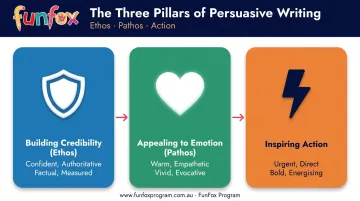
The 15 tones in this article map onto three classical persuasive goals:
- Building credibility (ethos) — tones that make the writer sound trustworthy and knowledgeable
- Appealing to emotion (pathos) — tones that connect with what readers feel
- Inspiring action — tones that move readers toward agreement or change
15 Examples of Tone in Persuasive Writing
Tones That Build Credibility
1. Authoritative A confident, knowledgeable voice that positions the writer as someone whose claims can be trusted. It relies on precise language and evidence-backed statements rather than personal opinion.
Example: "Studies consistently show that students who have at least 30 minutes for lunch demonstrate better concentration in afternoon sessions — a finding with direct implications for school policy."
2. Formal Structured, grammatically precise language that avoids contractions, slang, or casual phrasing. Formality signals seriousness and respect, making it ideal for persuasive essays and letters to authority figures.
Example: "We respectfully submit that the current lunch break allocation is insufficient to meet students' nutritional and social needs."
3. Serious A sombre, focused voice that communicates the issue genuinely matters and deserves careful consideration. It avoids humour and keeps the argument grounded.
Example: "The long-term effects of childhood stress deserve our full attention — this is not a matter we can afford to overlook."
4. Objective A balanced, fact-focused voice that presents evidence without obvious personal bias. Using an objective tone can strengthen a persuasive piece by appearing fair-minded, which makes the eventual conclusion more convincing.
Example: "Data from three independent studies indicates that schools offering extended lunch periods report lower rates of student behavioural incidents."
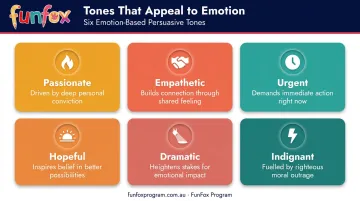
Tones That Appeal to Emotion
Credibility gets readers to listen. Emotion is what moves them to care.
5. Passionate A deeply felt, energetic voice that communicates the writer's genuine investment in the issue. Greta Thunberg's 2019 Davos address — "Our house is on fire" — is a masterclass in passionate delivery. Passion is infectious: readers care more when they sense the writer genuinely does.
Example: "I have watched my classmates exhausted, stressed, and hungry — and I refuse to accept that this is simply how school has to be."
6. Empathetic A warm, understanding voice that acknowledges the reader's feelings or situation before making an argument. Empathy reduces resistance by making readers feel seen and respected.
Example: "Many of you know what it feels like to face a long afternoon on an empty stomach — and that experience is exactly why this policy needs to change."
7. Urgent A compelling, time-sensitive voice that signals the issue cannot wait. Urgency creates pressure to act or agree now rather than later. Thunberg's line — "I want you to act as you would in a crisis" — is a clean example of urgency deployed without hysteria.
Example: "Every week we delay this decision is another week our students go without the support they need."
8. Hopeful A forward-looking, possibilities-focused voice that pairs a problem with the belief that a better outcome is achievable. Hope motivates readers to invest in the argument rather than feel powerless.
Example: "With some simple changes to the timetable, we can create a school environment where every student feels ready to learn."
9. Dramatic A heightened, emotionally charged voice that emphasises the stakes of the issue. When used well, drama draws readers in. When overused, it can undermine credibility, so deploy it selectively.
Example: "The bell rings, and 300 students have exactly twelve minutes to eat, breathe, and mentally prepare for five more hours of learning."
10. Indignant A morally outraged voice that communicates something is fundamentally wrong or unfair. Julia Gillard's 2012 misogyny speech — "I will not be lectured about sexism and misogyny by this man" — remains one of the most analysed examples of indignation used with precision. It galvanises readers who share those values, though it requires careful handling to avoid alienating others.
Example: "It is frankly unacceptable that students are expected to perform at their best when they are denied the basic conditions to do so."
Tones That Inspire Action
Once readers feel persuaded, these tones push them from agreement to movement.
11. Motivating An encouraging, rally-the-reader voice that inspires people to believe they can make a difference. Barack Obama's "I'm asking you to believe… in yours" from his farewell address is a well-known example of motivating tone at its most effective.
Example: "Each one of us has the power to push for this change — and together, we will."
12. Assertive A direct, self-assured voice that states positions clearly and without apology. Assertiveness is distinct from aggression; it's confident, not attacking.
Example: "The school must extend the lunch break. The evidence supports it, students need it, and parents expect it."
13. Confident A steady, certain voice that presents the writer's position as well-reasoned and beyond doubt. Confidence differs from assertiveness in that it focuses on belief in the outcome, not just the forcefulness of the statement.
Example: "When students are given adequate time to eat and rest, their academic performance improves — and the evidence makes that expectation entirely reasonable."
14. Conversational A friendly, natural voice that feels like speaking directly to the reader. This tone lowers the reader's guard and makes persuasion feel like a genuine exchange rather than a lecture. It works especially well in student essays aimed at peers, blogs, and social media.
Example: "Honestly, who can focus on algebra when their stomach is growling? Let's talk about what a reasonable lunch break actually looks like."
15. Optimistic A positive, solution-oriented voice that focuses on what can go right if the reader agrees or acts. Optimism makes the persuasive argument feel achievable rather than daunting.
Example: "A fifteen-minute extension to the lunch break is a small change with the potential to transform how students experience their entire school day."
How Tone Shapes the Power of Persuasion
Tone is built through specific language choices — it doesn't arrive by accident.
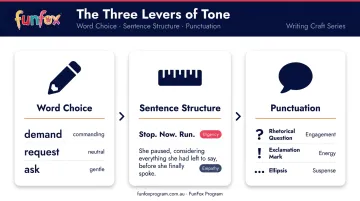
The Three Main Levers
- Word choice — Emotive vocabulary carries connotation that neutral words don't. "Demand" signals authority; "request" signals deference; "ask" signals informality. Each creates a different tonal effect.
- Sentence structure — Short, punchy sentences create urgency and assertiveness. Longer, flowing sentences suit empathy or formality. Students can change their tone by changing their sentence length.
- Punctuation — Rhetorical questions invite the reader in. Exclamation marks amplify passion. Ellipses create dramatic pause. Used deliberately, punctuation shapes tone just as much as the words themselves.
Tonal Shifts: Why One Tone Is Rarely Enough
Persuasive writers rarely stay in one tone for an entire piece, and the most effective ones shift intentionally. A strong student essay might open with an empathetic tone to connect with the reader, shift to an authoritative tone when presenting evidence, then close with an urgent or motivating tone to drive action.
This arc mirrors how persuasion actually works: readers need to feel understood before considering a new perspective, and they need to feel capable before they'll commit to change.
Matching Tone to Audience
A persuasive letter to a school principal calls for a formal and serious tone — contractions and colloquialisms undermine credibility. The same argument written for classmates might work better with a conversational and passionate tone that feels peer-to-peer rather than top-down.
Same position. Different audience. Different tone. The words matter less than whether the tone fits who's reading them.
How to Identify Tone in Persuasive Writing
Identifying tone is a skill that can be taught systematically. Here's a reliable process for primary and early secondary students:
- Start broad — ask whether the writer's attitude feels positive, negative, or neutral toward the subject.
- Zoom in on word connotations — "demand" vs. "request" vs. "ask" all describe the same action but signal very different attitudes.
- Consider the emotional target — what feeling is this writing trying to produce in you? Outrage? Hope? Guilt? The intended emotional response usually reveals the tone.
Four Textual Clues to Look For
| Clue | What to Look For | Example |
|---|---|---|
| Emotive adjectives and adverbs | Words that carry strong feeling | "desperately needed," "shameful neglect" |
| Point of view | First person feels personal; third person feels authoritative | "I believe" vs. "Evidence suggests" |
| Rhetorical questions | Questions the writer doesn't expect answered — they signal indignation, urgency, or invitation | "How long must students wait?" |
| Hedging language | Words like "perhaps," "it could be argued" signal objectivity or caution | Compare "This must change" vs. "This could be reconsidered" |
The best way to sharpen this skill is to read widely across persuasive text types — opinion columns, speeches, student essays, advertisements — and consciously label the tone before looking for the evidence that supports your label. The more text types students encounter, the faster they move from guessing the tone to reading it with confidence.
Tips for Using Tone Effectively in Persuasive Writing
Tip 1 — Know Your Audience Before You Write
The most effective persuasive tone is the one that resonates with the specific reader. Before drafting, ask:
- Who am I trying to convince?
- What do they value?
- What tone are they most likely to respond to?
A student writing to the school council needs a formal, serious tone that signals maturity. A student writing a persuasive piece for a class debate with peers can afford to be conversational and even humorous. Same student, same topic — but the audience changes everything.
Tip 2 — Be Intentional and Consistent
Choose a tone at the start of a piece and either maintain it or shift it deliberately. Accidental tonal inconsistency — for example, a formally argued persuasive essay that suddenly drops into sarcasm — confuses readers and undermines credibility.
Before: "The school board must immediately review its policy. I mean, come on, even a child can see this isn't working."
After: "The school board must immediately review its policy. The evidence clearly supports revision, and delay serves no one."
The second version maintains an assertive, serious tone throughout. The first creates a jarring tonal break that weakens the argument.

Tip 3 — Read Your Work Aloud to Check Your Tone
UNC's Writing Center recommends reading aloud because it forces writers to say each word and notice whether the tone is actually landing as intended. If a piece sounds harsh when you meant to be assertive, or flat when you meant to be passionate, that's the signal to revise word choices — not rewrite the argument entirely.
Students who want guided feedback on whether their tone is landing for the right audience can develop this skill through FunFox's Writers Club, which offers weekly live sessions and personalised feedback via Seesaw.
Frequently Asked Questions
What is the tone of persuasive writing?
Persuasive writing doesn't have one fixed tone. The tone depends on the writer's purpose, audience, and argument. Common tones include assertive, passionate, urgent, and authoritative, and effective pieces often blend several to move the reader through an emotional and logical journey.
What are the common tones used in persuasive writing?
The most frequently used tones in persuasive writing are authoritative, passionate, urgent, empathetic, and confident. Which tone works best depends entirely on what the writer wants the reader to feel and do — there's no universal answer.
How do you identify tone in persuasive writing?
Look at word choice (emotive vs. neutral language), sentence structure, and the emotional effect the writing has on you as a reader. Ask: what attitude is the writer projecting — outrage, hope, confidence, empathy? The answer is usually visible in the words chosen.
What is the difference between tone and voice in persuasive writing?
Voice is the writer's consistent personality or style across pieces; tone is the attitude conveyed in a specific piece and shifts depending on audience and purpose. A writer might always have a direct, clear voice but use an urgent tone in one essay and an empathetic tone in another.
Can a persuasive piece use more than one tone?
Yes — and the best ones usually do. Skilled writers shift tones as the argument develops: an essay might open with empathy, gain authority through evidence, then close on urgency. Varying the tone keeps readers engaged and moves them through the argument rather than holding a single note from start to finish.