Introduction
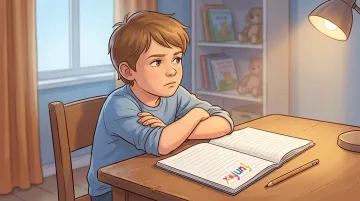
Your child comes home with another incomplete reading task. Their teacher flags concerns at parent-teacher night. You watch them slump at the desk, pencil down, convinced they "just can't write." It's a frustrating pattern — and one that classroom instruction, with 25-plus students and limited one-on-one time, often can't fix alone.
Private English tutoring addresses exactly this gap. The right tutor or structured program provides focused, personalised support: targeting the specific skills your child is missing, at their pace, in a setting where they're not competing for attention against 25 other kids.
According to NAPLAN data, a significant proportion of Australian students are not meeting proficiency benchmarks in reading and writing by Year 5 — meaning many children reach mid-primary school without the literacy foundations they need. Extra support, when it's the right fit, can change that trajectory.
This guide covers what Australian parents need to know: the signs your child needs extra support, what to look for in a tutor, how online and in-person options compare, typical costs, and the questions to ask before you commit.
Key Takeaways
- Nearly 1 in 3 Year 3 students fall below the Strong proficiency level in reading, and targeted private tutoring is one of the most effective ways to close that gap
- Look for tutors with teaching qualifications and demonstrated Australian curriculum alignment, not just personal English skills
- Live, structured online tutoring can be just as effective as in-person sessions and removes geographic limits
- Independent tutors typically cost AU$30–$90/hour; structured programs offer more consistency and accountability
- Always ask for a trial session before committing to a full term
Signs Your Child Could Benefit from a Private English Tutor
Academic Signals Worth Taking Seriously
2024 NAPLAN data from ACARA shows that 33.7% of Year 3 students were below the Strong proficiency level in reading, and 32.7% of Year 5 students were below Strong in writing. These aren't fringe cases — roughly one in three students is missing foundational benchmarks.
Common academic signals to watch for:
- Reading significantly slower than peers, with low accuracy or poor fluency
- Struggling to structure written tasks, even with plenty of time
- Below-average English results despite visible effort
- Difficulty completing written homework independently
- NAPLAN results flagged in the Developing or Needs Additional Support band
Behavioural and Emotional Clues Parents Often Miss
Grades don't tell the whole story. Children who struggle with literacy often show it through behaviour before it shows up on a report card:
- Refusing to read aloud at home or in class
- Avoiding written tasks entirely, or rushing through them carelessly
- Expressing frustration, tears, or statements like "I'm bad at English"
- Losing confidence in school generally, not just in English
These behavioural signals carry as much weight as academic results. A child who dreads writing has already decided they're not a "writing person" — and the earlier that belief is challenged, the easier it is to reverse.
Tutoring Isn't Only for Students Falling Behind
High-achieving students also benefit. Children preparing for selective school entry, competitive exams, or simply wanting to strengthen advanced writing and analytical skills often hit a ceiling in the classroom — there simply isn't time for extension work at that level. Focused tutoring fills that gap directly.
Common reasons high-achieving students seek extra support:
- Preparing for selective school entry or opportunity class tests
- Strengthening essay structure and analytical writing for high school
- Pushing NAPLAN results from Strong into Exceeding
What to Look for in a Private English Tutor
Qualifications and Pedagogical Ability
Personal English proficiency and the ability to teach English are two separate things. Look for:
- A teaching degree or formal training in literacy instruction
- Experience teaching primary-age students
- Membership or certification through the Australian Tutoring Association
- A Working With Children Check (WWCC) — this is mandatory across NSW, VIC, QLD, WA, and SA for anyone providing private tuition to minors in a child-related context
Note that WWCC requirements and application processes vary by state, so verify the relevant check for your state before engaging any tutor.
Curriculum Alignment
A tutor pulling in a different direction from the classroom creates confusion. In Australia, the English curriculum (Version 9.0) is organised across three strands — Language, Literature, and Literacy — and is specific to each year level. A good tutor knows what your child's school is teaching and builds on it, not around it.
Ask directly: Are you familiar with the Australian Curriculum Version 9.0 for my child's year level?
Teaching Style and Personality Fit
A technically qualified tutor who can't connect with your child will deliver limited results. Children respond to warmth, patience, and genuine engagement — especially reluctant readers and writers who already feel self-conscious.
Prioritise tutors who:
- Make sessions feel manageable and even enjoyable
- Adapt their approach when something isn't working
- Have experience with your child's specific age group and learning profile (a strong upper primary tutor may not be the right match for a Year 1 student)
Structured Progress, Not Homework Help
Finding the right personality fit matters — but so does what actually happens in each session. A tutor who only reacts to tonight's assignment won't build the skills your child needs long-term. Look for someone who offers:
- A clear session plan with defined learning goals
- Regular parent updates on progress
- A framework that sequences skills week to week
In-Person vs. Online English Tutoring: Which Is Right for Your Child?
The Practical Trade-offs
| Factor | In-Person | Online |
|---|---|---|
| Scheduling flexibility | Limited by travel and tutor location | Higher — sessions from home |
| Geographic access | Restricted to local tutors | Access to quality programs nationwide |
| Session consistency | Can vary with tutor availability | Programs often have backup coverage |
| Engagement tools | Physical materials, face-to-face | Screen sharing, digital tools, recordings |
Does Online Tutoring Actually Work?
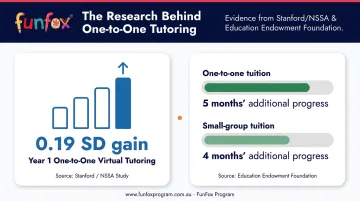
The short answer: yes, when it's done properly. A Stanford/National Student Support Accelerator randomised controlled trial of virtual early literacy tutoring found students assigned to virtual tutoring scored approximately 0.08 standard deviations higher on end-of-year literacy assessments, with first-grade students in one-to-one sessions showing gains of around 0.19 standard deviations. The model studied was live, structured, and focused on foundational skills — not passive worksheet packs.
The Education Endowment Foundation also reports that one-to-one tuition delivers an average of 5 months' additional progress, with small-group tuition producing around 4 months' additional progress when sessions are frequent and well-structured.
What a Quality Online Session Should Look Like
Not all online tutoring is equal. Avoid programs built around pre-recorded videos or downloadable worksheets with no live instruction. A effective online session includes:
- Live video interaction with a real teacher
- Screen sharing for written tasks and real-time feedback
- Small group or one-on-one format (not 20+ students)
- Session recordings students can review later
- Ongoing feedback tied to actual student work
FunFox Program is a structured example of this model — live Zoom classes capped at six students per session, built for Australian students from Year 1 through Year 10. Each program targets a specific stage:
- Readers Club (Years 3–6): comprehension strategies, critical thinking, and literary analysis
- Writers Club (Years 1–6): term-by-term genre curriculum covering descriptive, narrative, persuasive, and informative writing
- FunFox Foundation Club (Years 1–2): integrated reading and writing for early learners
- High School Literacy Club (Years 7–10): essay writing and literary analysis for secondary students
All programs align to the Australian Curriculum. Qualified teachers trained in the FunFox Way provide Seesaw-based feedback on worksheets between sessions, and because classes run online, families across Australia and internationally can join without location being a barrier.
How to Find Private English Tutors Near You
Main Channels Australian Parents Use
- Word of mouth — ask teachers, other parents, or school staff for recommendations
- School noticeboards — some schools maintain tutor lists or can refer families to vetted contacts
- Tutoring directories — platforms like Tutor Finder, Superprof Australia, and Learnmate let you search by subject, year level, and location
- Community Facebook groups — local parent groups often have pinned tutor recommendations
How to Evaluate Tutors Found Online
Once you find a candidate, verify before you commit:
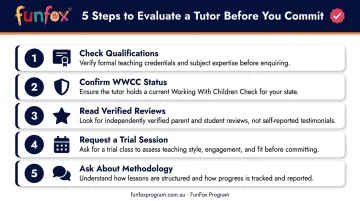
- Check qualifications — ask for evidence of a teaching degree or relevant training
- Confirm WWCC status — request the certificate number and verify it through the relevant state authority
- Read verified reviews — look for reviews that mention specific year levels and skills
- Ask for a trial session — reputable tutors and programs offer this as standard
- Ask them to explain their methodology — vague answers are a warning sign
Red Flags to Watch For
- No verifiable credentials or reluctance to share them
- Promises of dramatic or rapid results
- No structured session plan — just "we'll see what your child needs"
- Large upfront payment requests with no trial option
- No clear communication system with parents about progress
- Unusual low pricing with no explanation of methodology
"Near You" Doesn't Have to Mean Local
A structured online program can deliver more consistent results than an independent tutor found through a listing site. The reason is practical: purpose-built programs come with a defined curriculum, vetted teachers, and built-in progress tracking — none of which you need to vet yourself.
Programs like FunFox run live, small-group classes aligned to the Australian curriculum, with teacher feedback delivered directly to parents after each session. For families outside major metro areas, or those who simply want flexibility, the postcode no longer limits the quality of support available.
How Much Does Private English Tutoring Cost?
Pricing varies based on format, tutor experience, and inclusions. Here's a practical breakdown using available Australian market data:
| Format | Typical Rate | Notes |
|---|---|---|
| Independent tutors (marketplace) | $30–$90+/hour | Superprof Australia reports an average primary rate of ~$35.24/hr |
| Marketplace platform average | ~$42–$62/hour | Learnmate 2025 data: $42/hr primary average, $62/hr mean across all levels |
| Tutoring centres | Varies | Group vs. individual format affects price significantly |
| Structured online programs (e.g., FunFox) | $165/month | Per term ($495 total over 3 months), includes live classes, materials, feedback, and parent meetings |
Note: marketplace rates are platform-reported figures, not independent market research.
Hourly rates alone don't tell the full story. A lower rate with no structured plan, no progress tracking, and no parent communication can cost more in the long run than a program with everything built in. Before committing, consider what's actually included:
- Are materials and resources covered in the fee?
- Is parent communication built into the structure?
- Does the tutor or program track progress across sessions?
- Is there a trial before you commit financially?
FunFox's cost of $165 monthly for a 3-month term covers 10 weekly live sessions, digital worksheets, Seesaw feedback, class recordings, and an end-of-term parent/teacher meeting. That makes it straightforward to compare against a flat hourly rate when assessing true value.
Questions to Ask Before You Book
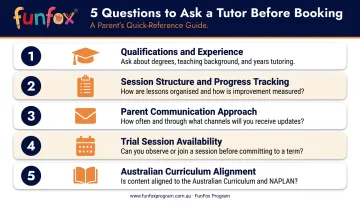
Before committing to any tutor or program, ask these five questions:
- What qualifications and experience do you have with my child's year level? Ask for specific examples, not general claims about teaching experience.
- How do you structure sessions and track progress over the term? A clear framework should be in place — not just reactive, ad-hoc help.
- How will you communicate updates to me as a parent? Regular feedback matters. A vague or non-committal answer here is a red flag.
- Do you offer a trial session before I commit? This is a reasonable expectation, and most reputable providers will say yes.
- Are your methods aligned to the Australian Curriculum for my child's year level? You want someone who knows the curriculum expectations for that year level, not just the subject broadly.
Why the Trial Session Matters
A trial session gives your child direct experience of the tutor's style before any money changes hands. It also gives you the chance to observe whether the tutor can hold your child's attention, explain things at the right level, and respond when your child gets stuck. FunFox runs free trial classes each term, which is a practical way to test the fit before you commit to a full term.
Where possible, involve your child in the decision. A child who feels comfortable from the first session is far more likely to engage consistently, and that consistency is what drives genuine improvement over time.
Frequently Asked Questions
How much does a private English tutor charge?
Independent tutors in Australia typically charge between $30 and $90+ per hour, with primary school rates averaging around $35–$42/hour on marketplace platforms. Structured online programs like FunFox cost around $165/month, which includes live classes, materials, and feedback — not just hourly instruction time.
Will a tutor help with dyslexia?
A tutor trained in structured literacy can support children with dyslexia, but this isn't universal — ask specifically about their experience and approach. Look for systematic phonics and multisensory techniques; the Australian Dyslexia Association recommends direct, explicit, structured instruction for these students.
What age is best to start English tutoring?
The early primary years — Foundation to Year 3 — are an ideal window for building foundational literacy skills, with research supporting early phonics and phonological awareness instruction. Tutoring at any primary stage can still close specific gaps — it depends on the child's goals and where they're struggling.
How often should my child have English tutoring sessions?
Once or twice per week is a practical starting point for most families. Consistency matters more than volume — the Education Endowment Foundation finds that short, frequent sessions with clear goals outperform sporadic intensive ones.
How do I know if my child needs an English tutor?
Key indicators include falling below reading benchmarks, reluctance to write or read aloud, teacher feedback flagging concerns, low confidence with English tasks, or NAPLAN results in the Developing or Needs Additional Support bands.
What's the difference between a private tutor and a tutoring program?
A private tutor is typically one individual working independently, with varying methods and no formal oversight. A tutoring program like FunFox offers a structured curriculum, trained and vetted teachers, consistent methodology, and built-in parent reporting — making it easier to track progress and maintain quality across the full term.