




Learning to read in first grade is a big milestone. Many children can recognize letters and sound out simple words, but reading often still feels slow, effortful, and tiring. Sentences come out word-by-word. Expression is limited. By the end of a page, your child may have forgotten what they’ve just read.
This is completely normal.
Fluency doesn’t develop overnight. It grows through gentle, repeated practice, the right kinds of activities, and encouragement that builds confidence instead of pressure.
If you’ve been wondering how to improve reading fluency in 1st grade in a way that feels supportive and effective, this guide walks you through what fluency really means, why it matters, and practical strategies you can start using today.
Key Takeaways
-
Reading fluency in 1st grade develops gradually through gentle, consistent practice.
-
Strong fluency supports comprehension, confidence, and enjoyment of reading.
-
Daily read-alouds, repeated reading, echo reading, and playful practice are highly effective.
-
Short routines (10–15 minutes) work better than long, exhausting sessions.
-
Avoid pressure, speed focus, and constant correction, confidence matters most.
-
Extra support like FunFox Readers Club can help build structured fluency skills.
Importance of Reading Fluency in 1st Grade
Reading fluency in first grade is more than just learning to read faster. It’s about helping children move from sounding out every word to reading with greater ease, understanding, and confidence. At this stage, fluency becomes the bridge between “learning to read” and “reading to learn.”
When children develop smoother reading early on, it supports their overall academic growth and their relationship with books.
Why reading fluency matters in 1st grade:
-
Supports stronger comprehension: When children don’t have to focus all their energy on decoding each word, they can better understand the meaning of what they read.
-
Builds confidence in young readers: Fluent reading feels easier, which encourages children to participate in class, read aloud, and practice more often.
-
Encourages a positive attitude toward reading: Reading becomes enjoyable rather than frustrating, helping children develop a long-term love for books.
-
Strengthens vocabulary and language development: The more comfortably children read, the more exposure they have to new words and sentence structures.
-
Improves performance across subjects: Reading fluency supports learning in maths word problems, science instructions, social studies, and other areas that require strong literacy skills.
-
Lays the foundation for future academic success: Children who build fluency early are better prepared for the increasing reading demands of later grades.
Supporting reading fluency in first grade isn’t about pressure or perfection; it’s about giving children the tools and confidence they need to grow into capable, motivated readers.
Signs Your First Grader May Be Struggling With Fluency

It’s normal for first graders to sound hesitant at times as they learn to read, but ongoing difficulty with fluency can signal that your child needs extra support. Recognizing these signs early allows you to respond gently and provide the right kind of practice before frustration builds.
You may notice a child struggling with fluency if they:
-
Read very slowly or with frequent pauses: Reading sounds choppy, with long gaps between words, making it hard to follow the sentence.
-
Sound out the same words again and again: Common, high-frequency words don’t become automatic, so your child works just as hard each time they see them.
-
Guess at words instead of decoding: They may look at pictures or say a word that “makes sense” rather than using the sounds in the word.
-
Lose their place easily while reading: They may skip lines, reread the same line, or struggle to track the text from left to right.
-
Read with little expression: Their voice may sound flat or robotic, showing that most of their effort is going into decoding rather than understanding.
-
Struggle to explain what they’ve just read: Because so much energy goes into sounding out words, there’s little left for comprehension.
-
Avoid reading aloud or becoming frustrated quickly: They may say reading is “too hard” or try to get out of reading time altogether.
Noticing one or two of these occasionally is part of learning. But if several of these signs appear consistently, it’s often a sign that your child would benefit from more targeted, supportive fluency practice.



How to Improve Reading Fluency in 1st Grade?
In first grade, children are moving from learning to decode words toward reading with smoother flow and understanding. This transition can feel challenging. Many children can sound out words but still read slowly, pause often, or lose meaning by the end of a sentence.
Improving fluency at this age is about building comfort, confidence, and automaticity, not pressure. When practice feels supportive and enjoyable, progress tends to follow naturally.
1. Read aloud to your child every day
This is one of the most powerful things you can do. When children regularly hear fluent reading, they internalize:
-
What natural pacing sounds like
-
How voices change with punctuation
-
How stories should “flow”
-
How readers express emotion
How to make this more effective:
-
Choose engaging stories, not just simple books
-
Pause occasionally and think aloud:
-
“I paused here because of the comma.”
-
“I’m going to make my voice excited because this part is exciting!”
-
-
Revisit favourite books so children hear fluency repeatedly
This strengthens fluency, comprehension, vocabulary, and love of reading at the same time.
2. Use repeated reading to build automaticity
Repeated reading helps children move words from “hard work” into long-term memory. Many parents worry about rereading the same book, but repetition is actually where fluency grows.
How to use repeated reading effectively:
-
Choose a short, manageable text (not a long chapter)
-
Day 1: Focus on accuracy
-
Day 2: Focus on smoother reading
-
Day 3: Focus on expression
-
Celebrate improvement:
-
“You didn’t stop as much today!”
-
“That sounded more like talking!”
-
Over time, this strengthens:
-
Word recognition
-
Pacing
-
Confidence
-
Stamina
3. Try echo reading when your child sounds unsure
Echo reading gives children a clear model to copy. Instead of saying “read this”, you:
-
Read one sentence fluently
-
Ask your child to repeat it
-
Keep your tone encouraging and relaxed
This is especially helpful for children who:
-
Read accurately but sound robotic
-
Struggle with punctuation
-
Lose rhythm across longer sentences
You are essentially lending them your fluency until they can build their own.
4. Strengthen phonics so fluency has a solid foundation
Fluency depends heavily on decoding skills. If a child struggles to sound out words, fluency will always feel hard.
Support decoding gently by:
-
Saying: “Let’s stretch the sounds” instead of giving the word
-
Covering part of the word and revealing it slowly
-
Revisiting common sound patterns (sh, th, ai, oa, ee, etc.)
-
Practising short word lists based on patterns (cat, bat, sat, mat)
This reduces guessing and helps children rely on real reading skills.
5. Keep daily practice short but consistent
Long reading sessions often backfire for first graders. Instead of aiming for long blocks:
-
Aim for 10–15 minutes a day
-
Practice at the same time each day (routine helps)
-
Stop before your child becomes tired or frustrated
-
Always end with success
Consistency matters more than duration. Ten focused minutes every day is far more powerful than one long session once a week.
6. Make fluency playful instead of pressured
Fluency grows best when children forget they’re “practising”. Try playful approaches like:
-
Reading in silly voices (robot, monster, teacher, baby voice)
-
Letting your child read to:
-
A pet
-
A stuffed animal
-
A younger sibling
-
-
Playing “expression challenges”:
-
“Read this sentence like you’re excited”
-
“Read this part like the character is scared”
-
This builds prosody (expression), which is a key part of fluency.
7. Focus praise on effort and progress
Many struggling readers begin to believe they are “bad at reading.” Your feedback can change that story. Instead of focusing only on correctness:
-
Say:
-
“You tried that word carefully.”
-
“You fixed that by yourself!”
-
“That sounded smoother than yesterday.”
-
-
Celebrate tiny improvements
-
Avoid comparisons with siblings or classmates
Confidence is one of the strongest predictors of long-term reading success.
8. Choose books that match your child’s level
Books that are too difficult slow fluency development. Good first-grade fluency books should:
-
Have a familiar vocabulary
-
Use simple sentence structures
-
Include phonics patterns your child knows
-
Allow your child to read most words successfully
Look for:
-
Decodable readers
-
Early reader series
-
Repetitive-pattern books
-
Levelled reading books
Success while reading is what builds motivation.
Suggested read: Best Lesson Plan for Reading Fluency | Build Confident Young Readers
Examples of Reading Fluency Practice in Real Life
Sometimes strategies make more sense when you can see what they look like in action. Below are simple, realistic examples of how reading fluency practice can happen at home with a first grader. These are not scripted lessons; they’re everyday moments that build confidence and smooth reading.
The goal is to show children that reading can feel manageable, supportive, and successful.
|
Situation |
What the Child Does |
What the Adult Says or Does |
Why It Helps |
|
Child reads slowly: “Th…e c…a…t r…an.” |
Sounds out each word with long pauses |
“Let’s try that sentence again together. Listen first: The cat ran. Now you try.” |
Models fluent reading and supports blending |
|
Child guesses a word: says “dog” instead of “puppy” |
Substitutes words instead of decoding |
“Let’s look at the first sound. Pppp… puppy.” |
Encourages decoding rather than guessing |
|
Child reads accurately but sounds robotic |
Reads correctly but without expression |
“Can you read that like the character is excited?” |
Builds prosody (expression) and meaning |
What to Avoid When Supporting Fluency?
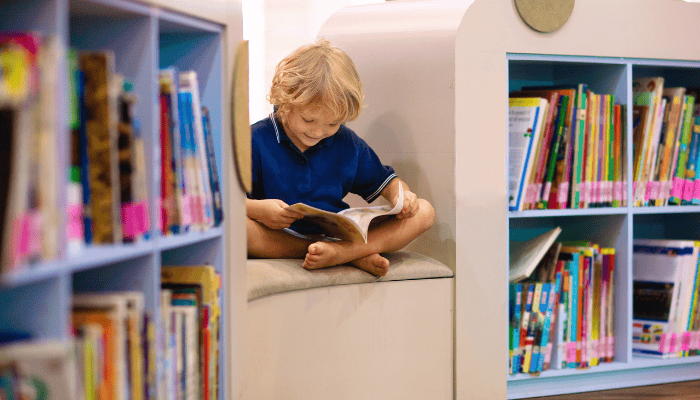
Helping your first grader build reading fluency is about creating confidence, not pressure. Even well-meaning support can sometimes make reading feel stressful if the approach isn’t quite right.
Being aware of what to avoid can protect your child’s motivation while still supporting steady progress.
-
Avoid correcting every single mistake immediately: Constant interruptions can break your child’s flow and make them feel anxious. It’s often better to let them finish a sentence, then gently revisit tricky words together.
-
Avoid pushing for speed too early: Fluency is not about racing through the text. Prioritizing speed over accuracy can lead to guessing instead of proper decoding.
-
Avoid long, exhausting practice sessions: Young children learn best in short bursts. Ten minutes of calm, focused practice is far more effective than a long session that ends in frustration.
-
Avoid comparing your child to others: Every child develops at their own pace. Comparisons can quietly damage confidence and make children reluctant to try.
-
Avoid showing frustration (even subtly): Children are highly sensitive to tone and body language. Staying calm and encouraging helps them feel safe to take risks with reading.
-
Avoid turning reading into a test: Reading time should feel supportive and enjoyable, not like performance. When children feel judged, they often shut down rather than grow.
When fluency practice feels safe, positive, and predictable, children are much more willing to keep trying, and that consistency is what leads to real progress.
Also Read: Reading Fluency Tips and Resources for Educators
How FunFox Readers Club Supports First Grade Reading Fluency
Some children need a little more structure and encouragement than home practice alone can provide. FunFox Readers Club is designed to support early readers in a way that feels safe, engaging, and confidence-building.
-
Small-group sessions with personalized attention
Children are taught in small groups so teachers can notice individual needs, adjust pacing, and offer gentle, real-time support. -
Strong focus on foundational skills
Lessons strengthen phonics, decoding, fluency, vocabulary, and comprehension — the core building blocks first graders need for confident reading. -
Interactive, child-friendly lessons
Sessions include stories, discussion, guided reading, and activities that keep young learners engaged rather than overwhelmed. -
Encouraging feedback that builds confidence
Teachers focus on effort and progress, helping children feel safe to try, make mistakes, and grow. -
Consistent routine that supports real progress
Regular sessions help children develop steady reading habits and a more positive relationship with books.
With FunFox, many children begin to read more smoothly, participate more confidently, and actually start to enjoy reading again. Book a free trial class today and give your child the supportive start they deserve.

Final Thoughts
Learning to read fluently in first grade is a journey, not a race. With gentle practice, consistent routines, and encouragement, children begin to move from sounding out every word to reading with smoother flow and growing confidence. The small moments you invest each day, rereading a favourite book, celebrating effort, listening patiently, can make a powerful difference over time.
If your child would benefit from extra guidance beyond what you can provide at home, FunFox Readers Club offers structured, small-group sessions that support phonics, fluency, and confidence in a calm, child-friendly environment.
Book a free trial class today and help your child build strong reading skills with confidence and joy.
FAQs
1. How can I improve my child’s reading fluency in 1st grade at home?
You can support fluency by reading aloud together daily, practising short rereads of familiar books, encouraging gentle sounding out, and praising effort rather than speed. Consistent short practice (10–15 minutes) works best.
2. What is a good reading fluency level for first graders?
By the end of first grade, many children can read simple texts smoothly, recognize common sight words, and retell what they have read. Fluency develops at different rates, and gradual progress is completely normal.
3. Why is my first grader reading slowly, even though they know the letters?
Many children are still developing decoding skills in first grade. Reading may feel slow because they are working hard to connect sounds to letters. With regular practice and gentle support, fluency usually improves over time.
4. How often should my child practice reading to build fluency?
Daily practice is ideal. Even 10–15 minutes of calm, focused reading each day can make a meaningful difference when done consistently.
5. What are some simple reading fluency activities for first grade?
Helpful activities include repeated reading, echo reading, choral reading (reading together), rereading favourite books, and using fun voices to practice expression.
6. When should I be concerned about my child’s reading fluency?
If your child avoids reading, becomes very upset during reading tasks, struggles to remember common words, or shows little progress over several months, it may be helpful to speak with their teacher or seek extra support.